
Regrow Confidence: How Stem Cell, PRP, and Exosome Therapy Are Revolutionizing Hair Loss Treatment
Hair loss is one of the most common aesthetic concerns for both men and women. According to the American Academy of Dermatology, over 80 million Americans suffer from hereditary hair loss (androgenetic alopecia) alone. From receding hairlines to thinning crowns, the emotional and psychological toll can be significant.
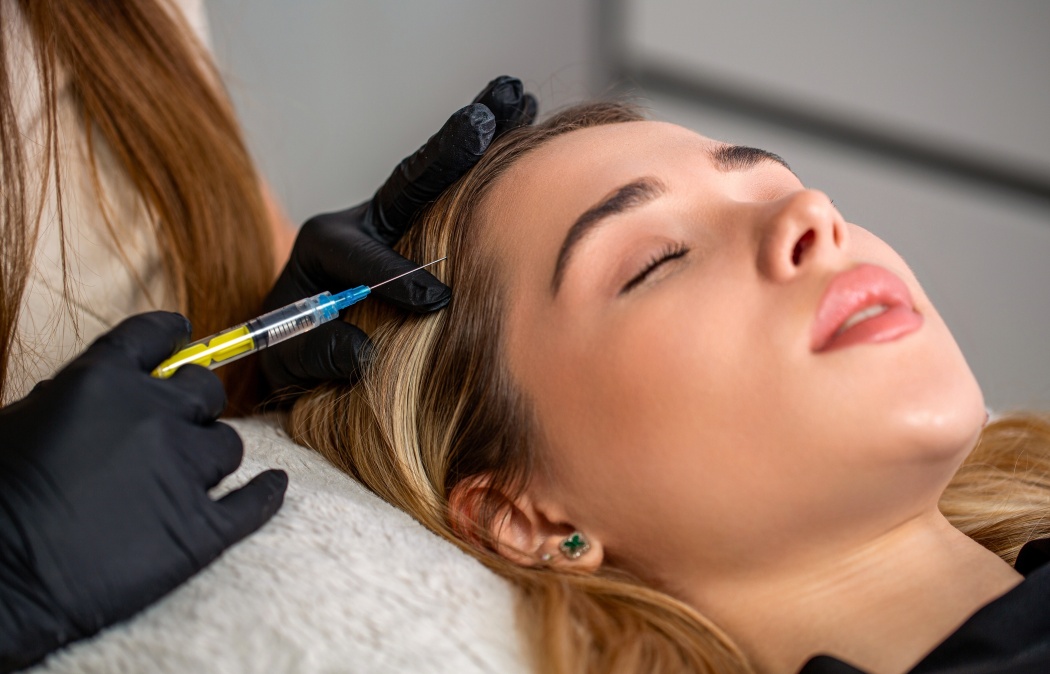
In recent years, regenerative medicine—specifically stem cell therapy, platelet-rich plasma (PRP), and exosome therapy—has emerged as a groundbreaking approach to combat hair loss and restore natural hair growth. These treatments harness the body’s own biological mechanisms to stimulate dormant hair follicles, promote healthy hair regrowth and increase circulation to the scalp.
Causes, Symptoms, and the Conventional Approach
Hair loss can occur for a variety of reasons including genetics (androgenetic alopecia), hormonal imbalances (thyroid issues or menopause for example), lifestyle or stress factors, autoimmune conditions (like alopecia areata), or nutritional deficiencies. Medications or illness can also lead to hair loss.
Symptoms include:
- Gradual thinning on top of the head
- Patchy bald spots
- Sudden loosening of hair
- In severe cases: full-body hair loss
Conventional treatments include medications such as Minoxidil (Rogaine) and Finasteride (Propecia), laser therapy, and hair transplant surgery. While these methods can work for some, they often come with limitations: side effects, lack of long-term efficacy, or really invasive procedures.
This is where regenerative therapy offers a safe, natural, and highly personalized alternative.
Stem Cell Therapy for Hair Loss
Stem cells are the body’s raw materials—cells from which all other cells with specialized functions are generated. In hair restoration, stem cell therapy involves using mesenchymal stem cells (MSCs) derived from sources such as fat (adipose tissue), bone marrow, or umbilical cord tissue.
When injected into the scalp, these stem cells secrete growth factors and cytokines that:
- Stimulate the hair follicles to enter the growth (anagen) phase
- Improve blood supply to the hair follicles
- Repair and rejuvenate follicular microenvironments
Androgenetic alopecia (“pattern baldness”) affects a large portion of the population – by age 70 it affects roughly 80% of men and 42% of women – and can severely impact self-esteem and quality of life pmc.ncbi.nlm.nih.gov. Unfortunately, standard treatments (like minoxidil or finasteride) mainly slow hair loss and do not restore a full head of hair. In response, regenerative medicine has turned to stem cells as a new approach: lab and animal studies suggest that stem-cell therapies can reactivate dormant hair follicle stem cells and even stimulate new follicle growth. Several recent reviews conclude that stem-cell–based treatments are safe and effective for improving hair density in men and women with pattern hair loss. No serious side effects were reported in most trials, and early evidence shows similar benefit in women as in men. Together, this emerging evidence suggests stem cell therapies could become valuable adjuncts or alternatives to conventional hair-loss treatments.
Umbilical Cord–Derived Stem Cells
Stem cells from the umbilical cord (specifically Wharton’s Jelly–derived MSCs) are a promising allogeneic source. These cells are harvested painlessly from donated umbilical tissue, and they proliferate quickly without ethical concerns. Compared to adult stem cells, Wharton’s jelly MSCs have a broader differentiation potential and very low immunogenicity. For hair loss, umbilical cord–derived MSCs (and their exosomes) have been shown in animal studies to boost follicle stem cell activity: for example, Mao et al. delivered exosomes from human umbilical MSCs into mice with androgenetic alopecia and saw significantly longer, thicker hairs (via activation of RAS/ERK signaling) compared to controls. Likewise, Yoo et al. demonstrated in vitro that human umbilical cord MSCs (and bone marrow MSCs) can induce hair-follicle–like tissue with hair-inducing capability.
Though human trials are still limited, case reports highlight clinical promise. Ahn et al. (2021) treated three patients (aged 20–55) with severe alopecia areata or universalis using multiple infusions of minimally manipulated umbilical cord MSCs (these stem cells undergo very limited processing before use, primarily to remove contaminants while also preserving their natural regenerative properties). In every case the alopecia resolved: for example, a 55-year-old woman with patchy alopecia areata received 15 treatments over 6 months, noting gradual improvements in the alopecia areata 3 months after the first round and was completely cured following all the treatments (no recurrence of alopecia areata); a 30-year-old with single-area alopecia (suffered from alopecia areata in one area of the scalp) was cured after just two treatments over 1 month, noting immediate improvements after the first round of treatment; and even a 20-year-old with long-standing alopecia universalis (diagnosed at age 12)- regrew a full head of hair after 14 treatments over the course of 12 months- noting hair growth about 3 months after the first round. The authors concluded that “umbilical cord MSC transplantation potentially treats patients who suffer from AA [alopecia areata] and related diseases” pubmed.ncbi.nlm.nih.gov. Such dramatic case successes – make umbilical cord MSCs an exciting avenue for hair restoration research.
Adipose-Derived Stem Cells
Fat tissue is another rich source of regenerative cells. Adipose-derived stem cells (ADSCs) and the stromal vascular fraction (SVF) harvested from fat contain multipotent MSCs along with growth factors and cytokines that support tissue repair. In practice, doctors isolate SVF from the patient’s own fat (a minimally invasive “lipoaspirate” procedure) and inject it into thinning scalp regions. Several studies have shown this can increase hair count and thickness. For instance, Perez Meza et al. reported that 6 patients (male and female) who received scalp injections of fat enriched with ADSC-SVF saw a 23% increase in hair density at follow-up. Likewise, Shin et al. (2015) treated 27 women with weekly microneedling plus adipose-derived stem cell conditioned medium (ADSC-CM) and observed hair density rise from 105.4 to 122.7 hairs/cm² (a 16% increase) over 12 weeks. These gains in hair count were achieved with no serious side effects.
Other studies using ADSC secretions (rather than whole cells) also found benefits. Fukuoka and Suga (2015) gave patients six sessions of intradermal injections of ADSC-conditioned medium. After treatment, men gained on average +29 hairs and women +15.6 hairs (mean increases) in the treated area. Narita et al. (2020) similarly noted a significant rise in hair density after monthly ADSC-CM injections (with or without finasteride). In all these trials, patients reported thicker, denser hair after ADSC therapy. Taken together, adipose-based treatments have consistently shown moderate but significant improvements in hair regeneration for both sexes.
Bone Marrow–Derived Stem Cells
Bone marrow–derived MSCs (BMSCs) are a classic regenerative source. Preclinical studies demonstrate that injecting BMSCs into the skin can switch follicles from the resting (telogen) phase to active (anagen) growth. Clinically, one small Egyptian trial (Elmaadavi et al., 2018) injected autologous bone marrow mononuclear cells (which include BMSCs) into the scalps of 10 alopecia patients. Six months later, hair thickness and density had increased markedly. On average, the treated patients saw ~52% improvement from baseline in hair density. In other words, bone marrow injections yielded similarly strong regrowth as other cell therapies. In general, BMSCs have potent regenerative capacity, but their collection and reinfusion is more invasive. As a result, adipose and allogeneic sources (like umbilical) are often favored for comfort and convenience, even though bone marrow cells work well biologically.
Microneedling vs Injection Delivery Methods
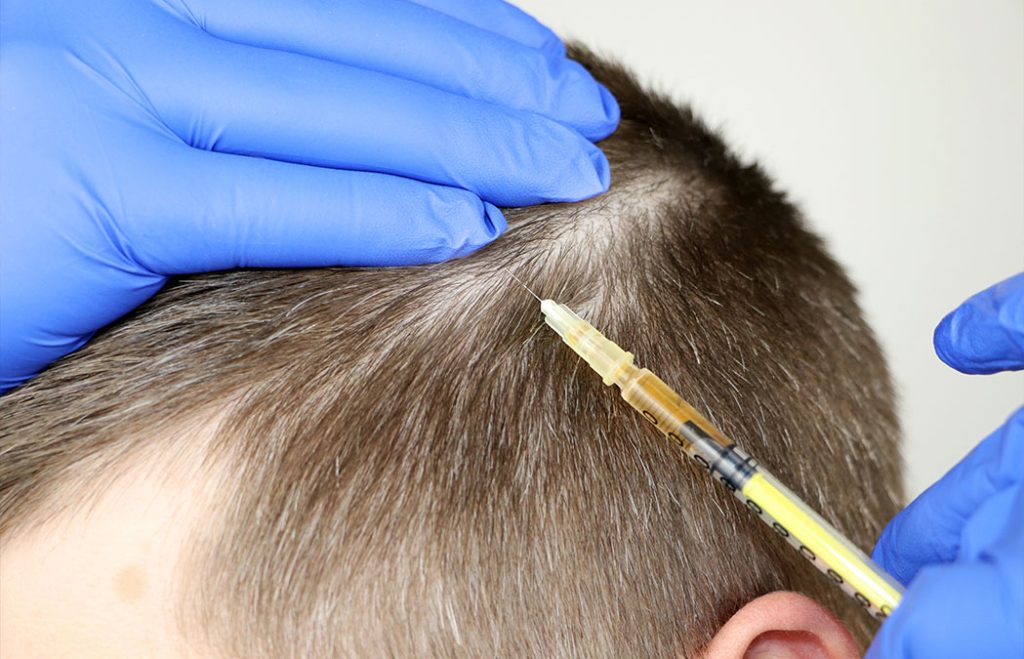
Stem cell therapies for hair can be delivered in different ways. The injection method involves directly injecting a suspension of cells or secreted factors (like MSCs, SVF, or conditioned media) into the scalp dermis. This ensures the material is deposited right into the hair-follicle area. For example, many studies above used intradermal needle injections to place stem cells under the skin. Direct injections can stimulate dormant follicles to reactivate or even induce new follicle formation – as one review noted, “stem cells may be directly injected into the scalp to allow the growth of new hair follicles” researchgate.net. The upside of injection is precise delivery: the clinician controls the dose and placement. The downsides are mild invasiveness, some pain/discomfort, and a small risk of bruising at injection sites.
Microneedling, by contrast, uses a roller or automated pen studded with tiny needles (usually 0.5–2.5 mm long) to create thousands of microchannels across the scalp. Each microinjury triggers the body’s wound-healing response, releasing growth factors (like VEGF, PDGF) and activating pathways (Wnt/β-catenin) that promote hair growth. Microneedling also greatly enhances transdermal penetration. In practice, clinicians often apply stem-cell–derived products (exosome gel, conditioned medium, or PRP) onto the scalp immediately after needling so they soak through the channels. Recent reviews highlight that microneedling can potentiate hair regrowth: it “enhances transdermal delivery” and “improves dermal papillae stem cell proliferation”. A 2025 analysis found that using microneedle patches to deliver MSC-derived exosomes was especially effective for targeting scalp tissues.
In summary, injection delivers cells directly to follicles (maximal concentration, targeted dosing) but is more invasive and localized; microneedling treats the entire area uniformly, is minimally invasive, and simultaneously activates healing signals, but usually carries topically applied factors rather than large intact cells. In practice, many protocols combine both: for example, a patient might get a few stem-cell injections into areas of most thinning and microneedling with an exosome gel over the broader scalp. The combination harnesses the direct seeding of cells with the natural regenerative boost of microneedling.
PRP (Platelet-Rich Plasma) Therapy for Hair Loss
PRP therapy uses the patient’s own blood which is then processed to concentrate platelets that are rich in growth factors. These growth factors are critical for hair follicle stimulation and regeneration.
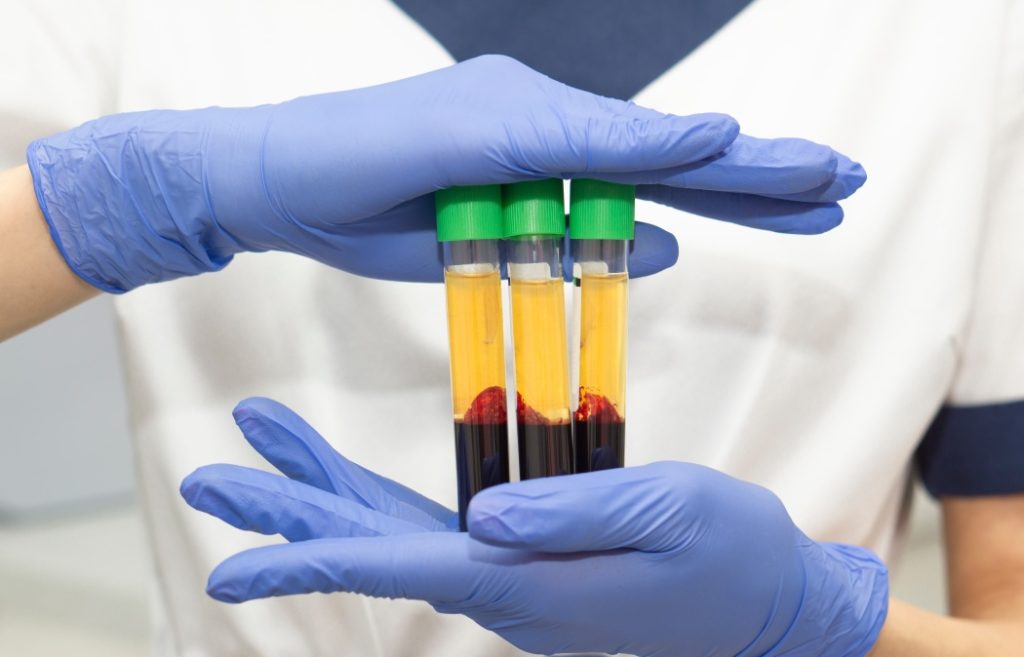
- PRP is injected into the scalp at areas of thinning hair
- Growth factors activate dormant follicles and prolong the anagen (growth) phase
- Stimulates angiogenesis (formation of new blood vessels), improving scalp health
In a 2019 review published in Dermatologic Surgery, PRP was shown to significantly increase hair density and thickness compared to placebo.
Exosome Therapy for Hair Loss
Exosomes are tiny extracellular vesicles derived from stem cells, often considered the most advanced form of regenerative treatment. Exosomes contain a rich mixture of over 200 growth factors, proteins, lipids, and RNA fragments that enhance cellular communication and regeneration.
- Exosomes are applied via injection or micro needling to the scalp
- Delivers potent bio-signals directly to the follicles
- Stimulates hair regrowth, reduces inflammation, and restores follicular function
Exosomes are tiny extracellular vesicles released by cells (such as stem cells or hair follicle cells) that carry proteins, RNAs and growth factors. When used in hair restoration, exosome treatments aim to jumpstart dormant follicles into a new growth phase. Research shows exosomes can activate hair follicle cells and trigger new hair growth. In fact, a recent review notes that “exosome therapy shows the most promising results in terms of hair regrowth and safety” compared to other treatments.
Clinically, exosome therapy is typically delivered by applying exosome-rich solutions to the scalp either via direct injections or with microneedling (tiny needles) to enhance penetration. Studies have found exosome treatments to be safe, with no serious side effects reported, and effective in growing hair in both men and women.
Evidence of Hair Regrowth in Men and Women
- Increased Hair Density and Thickness: Several studies report significant hair regrowth after exosome therapy. For example, a case series of 30 men with genetic hair loss received a single scalp injection of mesenchymal stem cell–derived exosomes and saw a statistically significant increase in hair density by 4 and 12 weeks post-treatment.
- Effective in Both Genders: Exosome therapy has worked in women as well as men. A retrospective study of 22 women and 9 men with early hair loss (or in remission) treated with exosome injections reported clear growth responses in both groups. This reflects the fact that pattern hair loss is not just a male issue – it “significantly impacts the quality of life” of both men and women. In practice, Dr. Nourparvar’s clinic treats all eligible patients (male or female) the same way with this therapy.
- Superior to Other Therapies: In reviews comparing regenerative treatments, exosomes often outperform platelet-rich plasma (PRP) and minoxidil. One systematic review noted that patients receiving exosomes had the most hair regrowth and satisfaction, followed by PRP, and that minoxidil required continuous use to maintain modest results. For example, in a controlled study PRP needed 3–5 sessions over many months, whereas a single exosome treatment yielded rapid, sustained hair improvements for years.
- Safe and Well-Tolerated: Importantly, no significant adverse effects have been reported in the literature. Both clinical trials and reviews emphasize that exosome scalp injections are well-tolerated. Patients generally experience only minor discomfort at injection sites or mild scalp redness – a much better safety profile than some oral medications.
Delivery Methods: Injection vs. Microneedling
Exosome therapy can be delivered by scalp injection or by topical application combined with microneedling. Injections involve injecting the exosome solution directly into the dermis of the scalp, similar to PRP injections. Microneedling uses tiny needles (often in a stamp or roller device) to create microscopic channels; exosomes are then spread on the scalp so they seep down into the follicles through these channels.
Both methods aim to bring the bioactive exosomes close to the follicle stem cells, but they differ in procedure: injection requires multiple needle pricks across the thinning areas, while microneedling covers broader areas in a single pass and also stimulates natural healing responses. Studies suggest microneedle delivery may penetrate more effectively. In practical terms, injections tend to be more precise but also a bit more uncomfortable (since each site is numbed and injected). Microneedling plus topical exosomes is generally gentler, stimulates scalp blood flow, and can treat larger areas evenly. Many providers use whichever method – or even both – based on patient comfort and extent of hair loss. Dr. Nourparvar will recommend the best approach; some patients opt for one method initially and may switch or combine methods in follow-up sessions.
Why Choose Regenerative Therapy Over Traditional Options?
While conventional treatments like Minoxidil or Finasteride may offer some benefit, they often come with limitations such as unwanted side effects (including hormonal disruptions or cardiovascular risks), and results that may diminish over time. Hair transplant surgery, while potentially effective, is invasive, expensive, and often involves a long recovery period and risk of scarring.
In contrast, regenerative therapies such as PRP, stem cells, and exosomes offer a more natural and holistic approach. They are minimally invasive, utilize the body’s own healing mechanisms, and carry a significantly lower risk of adverse effects. PRP enhances follicle activity using the patient’s own plasma, stem cells promote rejuvenation at a deeper cellular level, and exosomes deliver the most concentrated form of growth signals for hair regrowth. Collectively, these methods offer a more sustainable and biologically sound alternative with the potential for long-term, visible improvement in hair density and scalp health.
Meet Dr. Nourparvar: Your Trusted Expert in Regenerative Hair Restoration
Dr. Nourparvar brings over a decade of experience in regenerative medicine and non-surgical aesthetic care. He earned his medical degree from the New York College of Osteopathic Medicine and is a proud graduate of UCLA. Throughout his career, he has undergone extensive training at some of the nation’s most respected institutions, including UCLA, UC Irvine, Mount Sinai, NYU, and Children’s Hospital Los Angeles (CHLA). His skillset includes advanced techniques such as fat harvesting (including nano-fat and stromal vascular fraction), bone marrow aspiration, and the use of umbilical cord stem cells. Dr. Nourparvar also utilizes cutting-edge delivery methods such as intratympanic, intranasal, intrathecal, and intravenous applications. He has successfully treated professional athletes, as well as prominent figures in the film and music industries. Fluent in four languages, Dr. Nourparvar emphasizes clear communication and personalized care for every patient. At our clinic, he is committed to helping individuals avoid unnecessary surgeries and instead restore confidence through natural, effective, and evidence-based regenerative therapies.
Before & After
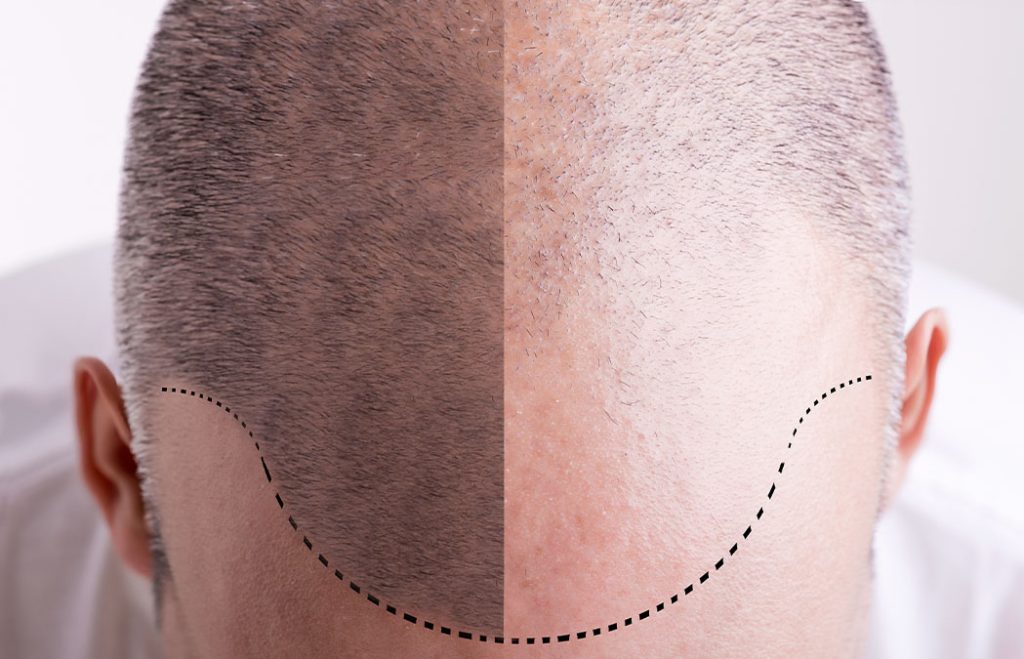
Patient before treatment- visible thinning and receding hairline, particularly along the temples ad crown (left); Patient after treatment- significant hair thickening and a visibly healthier scalp with regrowth in previously sparse areas.
FAQs About Hair Loss Treatments at Our Clinic
-
Yes, since these treatments use your own biological materials (or lab-processed sterile biologics like exosomes), there is a very low risk of adverse reactions.
-
Most patients begin to see noticeable improvement in a few months, with peak results around 6 months after the treatment.
-
Minimal to none. Some redness or mild soreness at the injection site may occur for 1–2 days.
-
It depends on the severity of hair loss. Typically, 3–4 sessions spaced 4–6 weeks apart are recommended but the best way to know how many sessions you will need is to have a personalized consultation with the doctor.
-
Anyone experiencing hair loss, or those wanting to prevent further thinning. It’s effective for both men and women.
Ready to Restore Your Hair Naturally?
If you’re tired of hiding thinning hair or dealing with ineffective products, regenerative therapy may be your solution. Contact our Los Angeles clinic today to schedule a consultation with Dr. Nourparvar and start your journey toward healthier, fuller hair.
Call Now or Book Online to experience expert, compassionate care tailored to you.
📞 Call us today at (310) 361-5480 to book your appointment or click here to schedule a consultation.
Sources:
- American Academy of Dermatology (www.aad.org)
- “Dermatologic Surgery”, 2019
- “Aesthetic Surgery Journal”, 2022
Medically reviewed by Padra Nourparvar, DO on
Posted on behalf of
Cedars Sinai Medical Office Towers
8631 West 3rd Street, #545E
Los Angeles, CA 90048
Phone: (310) 361-5480
Mon – Thu: 8:30am – 6:00pm
Friday: 8:30am – 4:30pm